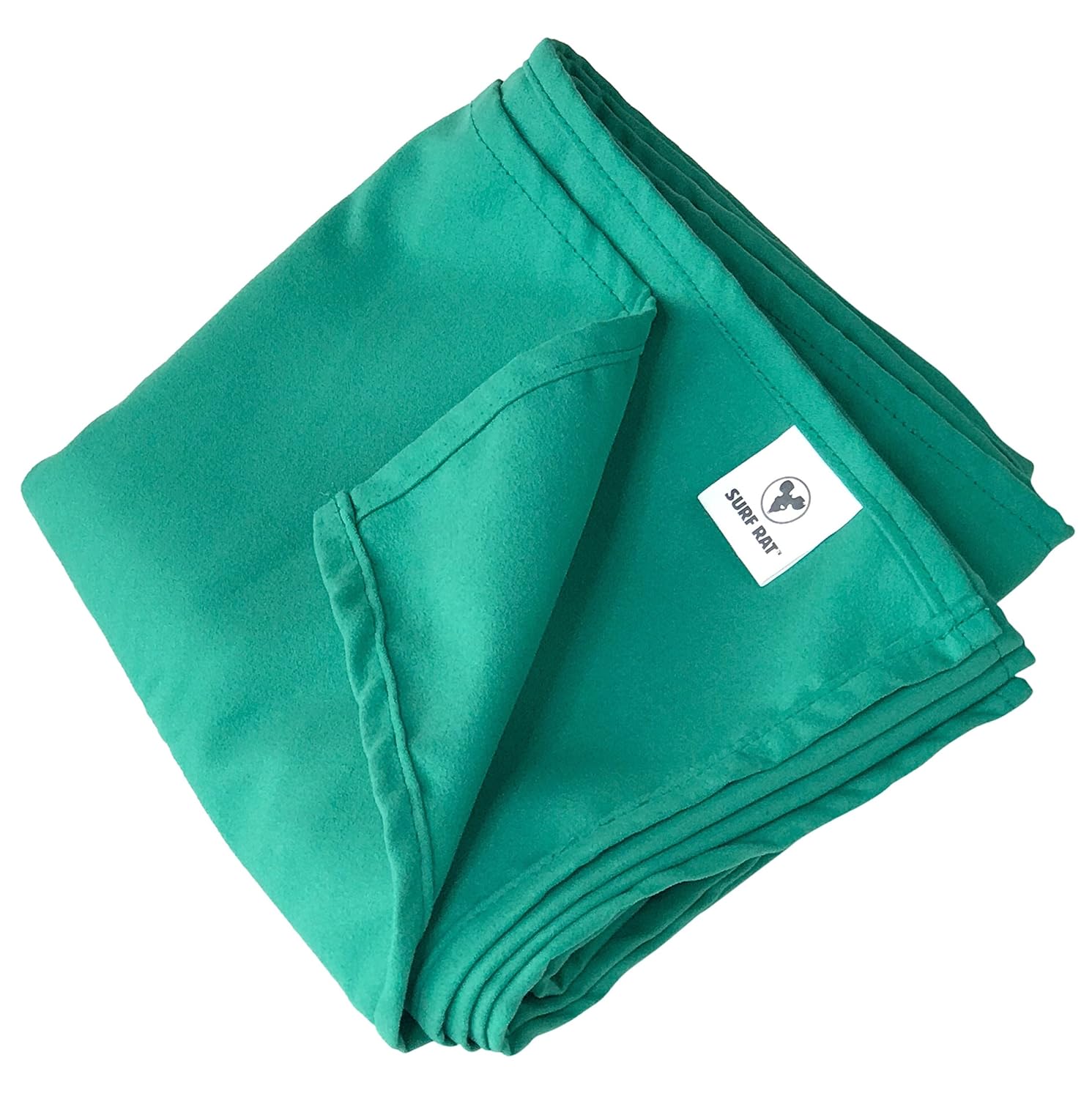
Bath towels are woven items of fabric either cotton or cotton-polyester which can be used to absorb moisture on the body after bathing. Bath towels are often bought in a set with face towels and wash cloths and are all the time the biggest of the three towels. Bath towels are usually woven with a loop or pile that is mushy and absorbent and is thus used to wick the water away from the physique. Particular looms called dobby looms are used to make this cotton pile.
Bath towels are generally of a single color however may be decorated with machine-sewn embroidery, woven in fancy jacquard patterns (pre-determined computer program driven designs) or even printed in stripes. Since towels are uncovered to much water and are washed on scorching-water wash settings more continuously than different textiles, printed towels might not retain their sample very long. Most towels have a two selvage edges or finished woven edges alongside the sides and are hemmed (cut and sewn down) at the highest and backside. Some toweling manufacturers produce the yarn used for the toweling, weave the towels, dye them, minimize and sew hems, and ready them for distribution. Others buy the yarn already spun from different wholesalers and solely weave the toweling.
History
Till the early nineteenth century, when the textile industry mechanized, bath toweling might be relatively expensive to buy or time-consuming to create. There is a few query how necessary these sanitary linens were for the typical individual-after all, bathing was not practically as universally popular 200 years in the past as it’s in the present day! Most nine-teenth century toweling that survives is, indeed, toweling most likely used behind or on high of the washstand, the piece of furniture that held the wash basin and pitcher with water in the times earlier than indoor plumbing. Much of this toweling was hand-woven, plain-woven natural linen. Fancy ladies’ magazines and mail order catalogs feature fancier jacquard-woven coloured linen patterns (particularly pink and white) however these were extra prone to be hand and face cloths. It wasn’t until the 1890s that the extra smooth and absorbent terry cloth changed the plain linen toweling.
As the cotton trade mechanized in this nation, toweling material might be bought by the yard in addition to in completed items. By the 1890s, an American home-wife may go to the general retailer or order through the mail either woven, sewn, and hemmed Turkish toweling (terry cloth) or may buy terry cloth by the ‘y’ard, minimize it to the appropriate bath towel measurement her household favored, and hem it herself. Quite a lot of toweling was obtainable-diaper weaves, huck-abacks, “crash” toweling-primarily in cotton as linen was not commercially woven on this nation in great amount by the 1890s. Weaving factories started mass manufacturing of terry cloth towels by the top of the nine-teenth century and have been producing them in comparable fashion ever since.
Raw Supplies
Uncooked supplies embody cotton or cotton and polyester, relying on the composition of the towel in manufacturing. Some towel factories purchase the first uncooked materials, cotton, in 500 lb (227 kg) bales and spin them with synthetics so as to get the kind of yarn they want for production. However, some factories buy the yarn from a provider. These yarn spools of cotton-polyester mix yarn is bought in big portions in 7.5 lb (3.Four kg) spools of yarn. A single spool of yarn unravels to 66,000 yd (60,324 m) of thread.
Yarn should be coated or sized to ensure that it to be woven extra easily. One such trade coating incorporates PVA starch, urea, and wax. Bleaches are usually used to whiten a towel before dyeing it (if it is to be dyed). Once more, these bleaches fluctuate depending on the manufacturer, but may embrace as many as 10 ingredients (some of them proprietary) together with hydrogen peroxide, a caustic defoamer, or if the towel is to remain white, an optical brightener to make the white look brighter. Synthetic or chemical dyes, of advanced composition, which make towels each colorfast and vivid, might also be used.
Design
Most towels will not be specifically designed in advanced patterns. The vast majority is straightforward terry towels woven on dobby looms with loop piles, sewn edges at top and backside. Sizes differ as do colours depending on the order. More and gym towel more, white or inventory towels are despatched to wholesalers or others to decorate with pc-pushed embroidery or decorate with applique fabric or decoration. This occurs in a special location and is often achieved by another firm.
The Manufacturing
Course of
Spinning
– 1 As mentioned above, some factories spin their own yarn for bath towels. If this is completed at the factory, the producer receives big 500 lb (227 kg) bales of either high or “middling grade” (of medium high quality) cotton for conversion into yarn (quality depends upon the producer and high quality of the towel in production). These bales are broken open by an automated Uniflock machine that nips a bit off the top of every bale, opens it up after which lays it down. The Uniflock opening machine blends the cotton fibers collectively by repeatedly beating it so impurities fall out or are filtered out (these bales include many impurities inside the raw cotton). The extra pure fibers are blown by tubes to a mixing unit the place the cotton is blended collectively earlier than they’re spun. Increased high quality towels use cotton with fibers that are blended collectively 3 times before spinning. In some factories, the cotton is blended with polyester during this blending process.
– 2 The mixed fibers are then blown via tubes to carding machines the place revolving cylinders with wire teeth are used to straighten the fibers and proceed to take away impurities before spinning. The cotton fibers, whereas not yet yarn, are shaping up into parallel fibers in preparation for spinning.
– 3 These parallel fibers are then condensed into a sliver-a twisted rope of cotton fibers. These slivers are despatched into another machine by which they are blended once more and despatched between other rollers for straightening. The final word objective is long, straight, parallel fibers as a result of they produce stronger yarns. (Stronger yarns require much less twisting which additionally produces robust yarns but makes them less smooth and absorbent.) The fibers are wound on a large roll and sent on a cart and fed into the combing machine.
– Four Fibers are combed here, additional straightening the fibers with a finer set of wire teeth than used on the carding machine. Combing removes the shorter fibers, that are coarser and woollier, leaving the finer, longer, silkier cotton fibers for spinning into yarn. As soon as combed, the fibers are formed right into a twisted rope sliver again.
– 5 The slivers journey to roving machines where the fibers are additional twisted and straightened and formed into rovings. The roving frame additionally barely twists the fibers. The result’s an extended roving of cotton, which is then wound onto bobbins in the ultimate step earlier than spinning.
– 6 Now the roving is ready for spinning. The bobbin is spun on a ring-spinning machine, which mechanically draws out or pulls the cotton roving out right into a single strand. The fibers basically catch each other to form one continuous thread and twists the thread barely as it’s pulled or As soon as the toweling is made, it is wound on an off-loom take-up reel. It’s then transported to bleaching as big rolls of fabric and put right into a water bath with bleaching chemicals corresponding to hydrogen peroxide, caustic defoamers, and other proprietary ingredients. All toweling have to be dyed pure white earlier than it is dyed any colour.
spun. As soon as the yarn is spun, it is mechanically wound on massive wheels that resemble rounds of cheese when full of thread.
Warping
– 7 Warp is longitudinal threads in a piece of woven materials which are tightly stretched or warped on a beam. Latitudinal threads known as weft or filler are passed under and over the warp to type the fabric. The massive spools of just-spun cotton are able to be warped or wound on a beam that can be inserted into the loom for weaving. If the yarn is bought, the 7.5 lb (3.4 kg) spools are readied for warping. A warping beam is then warped through which threads are anchored and wrapped to a big beam in a whole bunch of parallel rows. Completely different towel widths require different numbers of warp threads.
– Eight These enormous beams, stuffed with wrapped warp threads, are positioned right into a rack that holds as much as 12 beams and microfiber bath towel Price sized in preparation for weaving. The threads have to be sized or stiffened to make the piece simpler to weave. PVA starch, urea, and wax are rolled onto and pressed into the yarn. The threads are then run over drying cans-Teflon-coated cans with steam heat emanating from with-in. This helps to dry the warp threads quickly. (1,000 warp ends are pulled over nine cans to dry.) These beams, with coated threads, are now despatched to the looms.
Weaving
– 9 The beams are picked up by a pallet jack or hydraulic lift truck and transported to looms. These looms vary in width but could also be as slim as eighty five in (216 cm) or as wide as 153 in (389 cm). (Not surprisingly, the wider the loom, the slower the weaving because it takes longer for weft threads to cross the warp.) The beams are lifted onto the looms mechanically with a warp jack, which might bear the load and size of the beam.
– 10 Towels are woven on dobby looms, that means every loom has two sets or warp and thus two warp beams-one warp known as the ground warp and types the physique of the towel and the opposite is called the pile warp and it produces the terry pile or loop. Every set of warp threads is rigorously fed by a set of steel eyes and is attached to a harness. (Harnesses are separate, parallel frames that may change in their vertical relationships to each other.) These harnesses mechanically increase and decrease these warp threads in order that the weft or filler may be passed between them. The intersection of the warp and weft is woven fabric. The filler yarn is programmed in order that it is loosely laid into the woven fabric. When this free filler is overwhelmed or pressed into the fabric, the slack is pushed up turning into somewhat loop. After being dyed, the towel is hemmed and reduce into standardized sizes.
Shuttles, which carry the filler threads, are really shot across these large looms at top-speeds-these towel-making looms might have 18 shuttles fired throughout the warp from a firing cylinder. One shuttle follows right behind the following. As quickly as the one shuttle shoots throughout the warp threads, the shuttle drops down and is transported back to firing cylinder and is shot across once more. A typical towel-weaving machine has 350 shuttle insertions in a single minute-nearly six shuttles fired across every second. Thus, towels are woven very quickly on these giant mechanized dobby looms. In a single small towel-making manufacturing facility, 250 dozen bath towels could be made in one loom in a single week-and there are 50 looms within the manufacturing facility.
Bleaching
– eleven As soon as the toweling is made (it’s one lengthy terry cloth roll and has no beginning or finish), it is wound on an off-loom take-up reel. It is then transported to bleaching as enormous rolls of fabric and put into a water bath with bleaching chemicals such as hydrogen peroxide, caustic defoamers, and different proprietary components. All toweling have to be dyed pure white before it is dyed any color. The wet toweling laden with chemicals is then subjected to tremendously excessive temperatures. The heat makes the chemicals react, bleaching the microfiber beach towel. If you have any kind of questions concerning where and how you can make use of Microfiber Bath Towel Price, you can call us at our own web site. The roll is then washed at the very least as soon as and as many as three times in a big washer to get all chemicals out of the toweling. The toweling is dried, and whether it is to remain white toweling, it is ready to be reduce at the highest and backside, lock-stitched sewn, and have a label connected (all of this is done with one machine).
Dyeing
– 12 Whether it is to be dyed, the big, dried uncut rolls are taken to massive vats of chemical dyes, which have proven over time to offer colorfast toweling after extensive residential laundering. After being immersed within the vat, the toweling is eliminated and pressed between two heavy rollers which forces the dye down into the toweling. An intensive steaming sets the shade. The toweling is once more steam-dried, fluffed within the drying course of, and then the dyed towels are prepared for reducing, hemming, and labeling.
Cutting, folding, and packaging
– 13 Final visual inspection of the minimize and hemmed towels happens and they’re handfolded and conveyed to packaging, the place computerized packaging gear forms a bag across the towels and UPC labels are connected to the luggage. These packaged towels are sent to the stock room, awaiting transport out of the plant.
Quality Control
Towels are rigorously checked for high quality control throughout the manufacturing course of. If yarn is bought, it is randomly checked for weight and should be the standard established by the company (lighter yarn spools point out the yarn is thinner than desired and will not make as sturdy toweling). Bleach and dye vats are periodically checked for applicable chemical structure.
In the course of the weaving course of, some firms go the cloth over a lighted inspection desk. Here the weavers and high quality inspectors monitor the towel for weaving imperfections. Barely unevenly woven towels may be straightened out and touched up. However those who cannot could also be labeled “seconds” or imperfect or completely rejected by the corporate. As in all features of the method, visual checks are a key to quality control-all concerned in the process understand minimum standards and monitor the product at all times.
Byproducts/Waste
Doubtlessly dangerous byproducts are sometimes combined in the water that is used to bleach, wash, and dye the towel fabric. Significantly, the bleaching process contains elements (peroxides and other caustics) that can’t be discharged untreated into any water supply. Many toweling factories run their very own water therapy plants to insure that the water the plant discharges meets minimal requirements for pH, temperature, and so on.
Where to Study Extra
Books
Montgomery Ward & Co. Spring and Summer season 1895 Catalogue and Buyer’s Information. NY: Dover Publications, Inc. 1969.
Tate, Blair. The Warp: A Weaving Reference. Ashville, NC: Lark Books, 1991.
Other
Fieldcrest Cannon. “The Making of Royal Velvet Towels.” Unpublished script for a video on towel manufacturing. Kannapolis, NC, 1998.